Shaping the Future of Manufacturing with Local Students: Orbray's Capstone Project Partnership

Deeply rooted in Yuzawa, Akita, Orbray continues to pursue manufacturing excellence with a global perspective. Orbray is committed not only to advancing precision processing technologies but also to nurturing the next generation of talent and contributing to the local community. One of the ways we fulfill these vital missions is by supporting students who are undertaking their Capstone Project at Akita Prefectural University.
This article traces the journey of the project, highlighting the students' growth through trial and error, and exploring what the project suggests about the future of production technology.
Local Students and Industry Working Together to Solve Manufacturing Challenges
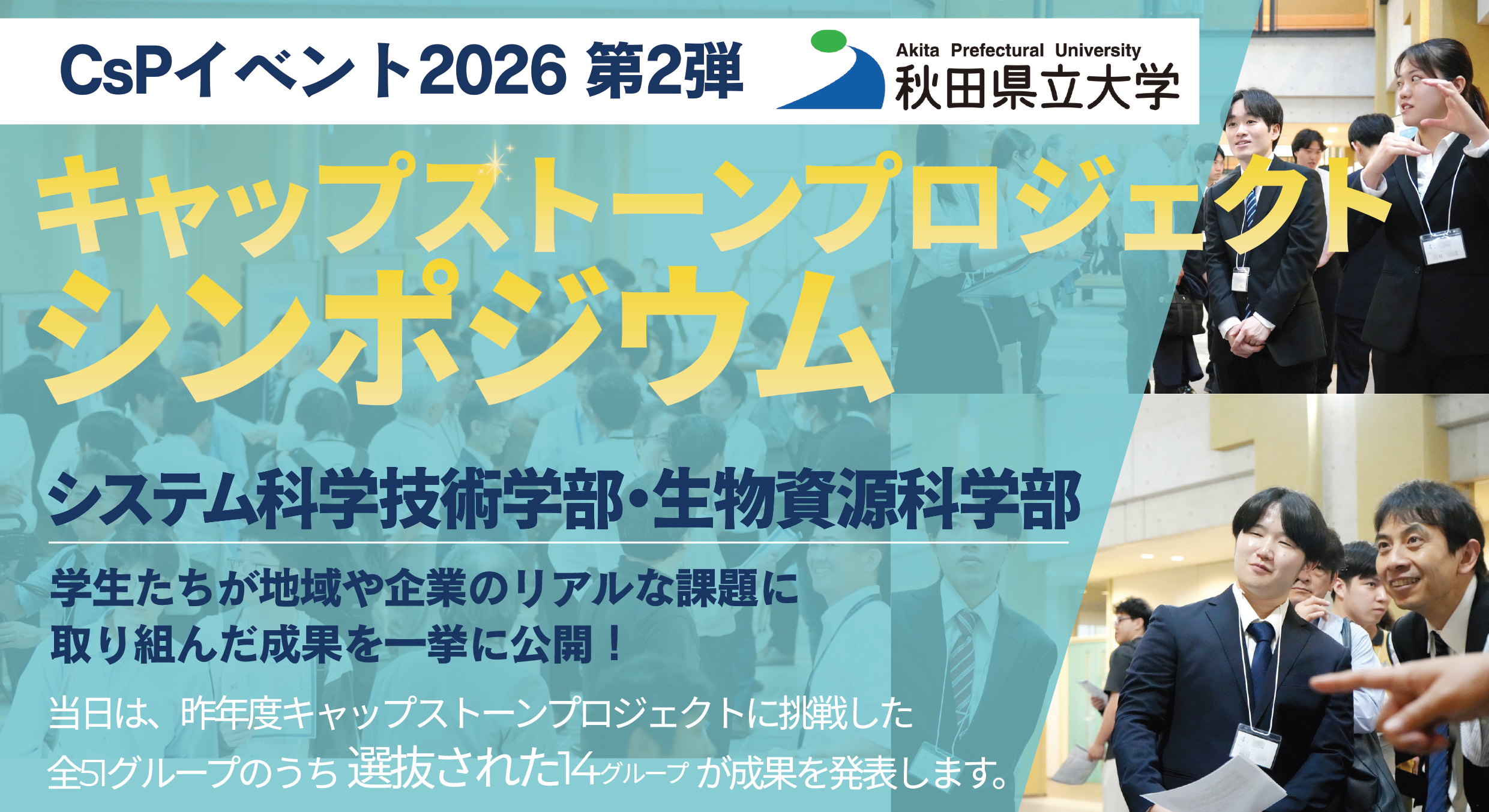
This year's Capstone Project at Akita Prefectural University builds on the previous year's research theme. The primary objective was ambitious: to determine how craftsmanship developed through many years of experience could be translated into automated systems.
Orbray participated in the project not as an instructor providing answers, but as a partner working alongside the students to tackle the challenges together. Through monthly online discussions and ongoing communication via email, we shared insights gained from real-world industry experience and supported the students' research efforts. Building upon the work handed down by their predecessors, the students, faculty members, and company representatives collaborated to define the key challenges that would guide this year's work.
A Project Fueled by Excitement for New Technologies
At the beginning of the project, the students who had just joined the laboratory were a bit anxious.
"When we first entered the lab, many of us didn't know each other very well, so things felt a little awkward," one student recalled.
Beneath that initial uncertainty, however, was a strong curiosity and enthusiasm for exploring new technologies.
"The senior students explained the previous year's work to us, and together we clarified what we wanted to accomplish this year. Whether it was taking on new challenges or improving upon earlier results, we were excited about the opportunity to learn new technologies and approaches."
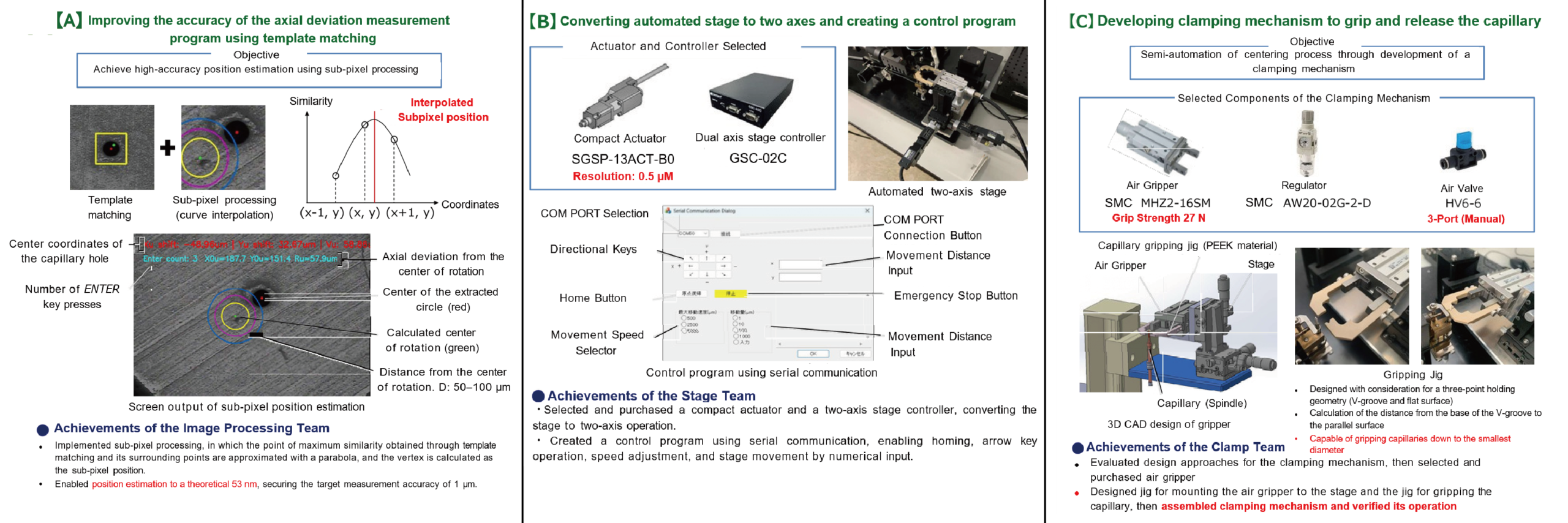
As the research progressed, the team divided into three groups: the Stage Team, the Clamp Team, and the Image Processing Team, each responsible for a different aspect of the project. While the work initially focused on individual tasks, regular discussions and constructive feedback among team members gradually strengthened their collaboration. During the preliminary experiments conducted in the final stage, every member actively contributed ideas, demonstrating a strong sense of unity and shared purpose.
Orbray's Hands-On Support Helped Students to Think Independently
For the students, direct interaction with an external company provided a valuable learning experience that extended far beyond the classroom. Practical communication tasks, such as exchanging ideas via email and presenting progress updates through slide presentations, became important opportunities for growth.
"We had experience communicating within the university, but exchanging ideas with people outside the university by email was completely new to us. At first, we weren't sure how to write professional emails or communicate our thoughts effectively."
Throughout the process, Orbray offered guidance rooted in professional expertise while remaining attentive to the students' perspectives.
"They listened carefully to our ideas and provided detailed advice in areas where we lacked knowledge. Their professional insights were extremely valuable."
At Orbray, our role was never to provide the correct answers. Instead, we sought to equip students with the perspectives they needed to think critically and make their own judgments. Our goal was to support the development of their ability to investigate, analyze, and solve problems independently.
Experiencing the Reality of Production Technology
Through this project, the students gained firsthand exposure to the rewards and realities of production technology. By working on problems similar to real-world industrial challenges, they were able to envision themselves more clearly as future engineers.
One student reflected on the experience:
"Compared with other projects, this one was much closer to actual production technology. It was exciting to experience, as a student, the kind of work I might actually be involved in after joining a company."
Experiencing the process of generating ideas, and then transforming those ideas into reality through structured planning, implementation, and problem-solving led some students to consider engineering and technical professions as attractive career paths.
Automating Craftsmanship: A Challenge Society Needs to Solve
The challenge of automating skilled craftsmanship is far from simple. Yet it represents one of the most pressing issues facing the manufacturing industry today.
A student responsible for image processing described the significance of the research in the following way:
"There are countless products in society that depend on the skills of experienced craftspeople. I believe efforts to automate these processes, or to make production less dependent on individual expertise, will become increasingly important in many different fields."
One reason this project received the Corporate Award, presented by participating partner companies to recognize outstanding achievements and innovative proposals, was its focus on addressing a pressing social challenge. At a time when many organizations are grappling with labor shortages and the difficulty of transferring technical expertise to future generations, the students distinguished themselves by establishing clear goals and producing meaningful results within their teams. Their achievement demonstrated not only creativity and perseverance, but also a genuine commitment to helping solve issues that are increasingly important to society.
Nurturing the Future of Manufacturing within the Local Community
The students confronted head-on the difficult challenge of automating skilled craftsmanship and persevered in their search for solutions. Their dedication inspires optimism about the generation that will lead manufacturing into the future.
The spirit of "Challenge with Passion," a value that Orbray has long embraced, was clearly reflected in the students who participated in this project. Taking the first step without fear of failure and learning through experience are essential drivers of personal growth and technological advancement.
As a company rooted in Akita, Orbray is committed to supporting the learning, growth, and ambitions of future generations. By bringing together the fresh perspectives of students and the expertise cultivated through years of manufacturing experience, we believe the future of manufacturing can become even more exciting and innovative.
Orbray will continue to pursue new challenges to advance the future of manufacturing, and create new stories together with our local community.
-
Silicon Photonics: Why is it essential for 5G?

-
Photoelectric fusion devices and silicon photonics

-
Optical filters: Essential components of high-speed, high-volume optical communications systems

-
Optical Mounting Technology ( Die bonding / Wire bonding)
-
What is a Ferrule? : The history and development of the ferrule continues today with its ever pursuit of high accuracy of 1um or less at reduced costs

-
What are optical interconnects and fiber optics?