Challenge with Passion: How Orbray Passes Craftsmanship to Future Generations by Developing its People
Cutting, grinding, polishing. The precision processing technology Orbray has refined over the decades now supports the world’s most advanced infrastructure, from optical communications to semiconductors and medical devices. Yet no matter how far mechanization advances or how much the times change, people have always been at the core of that technology.
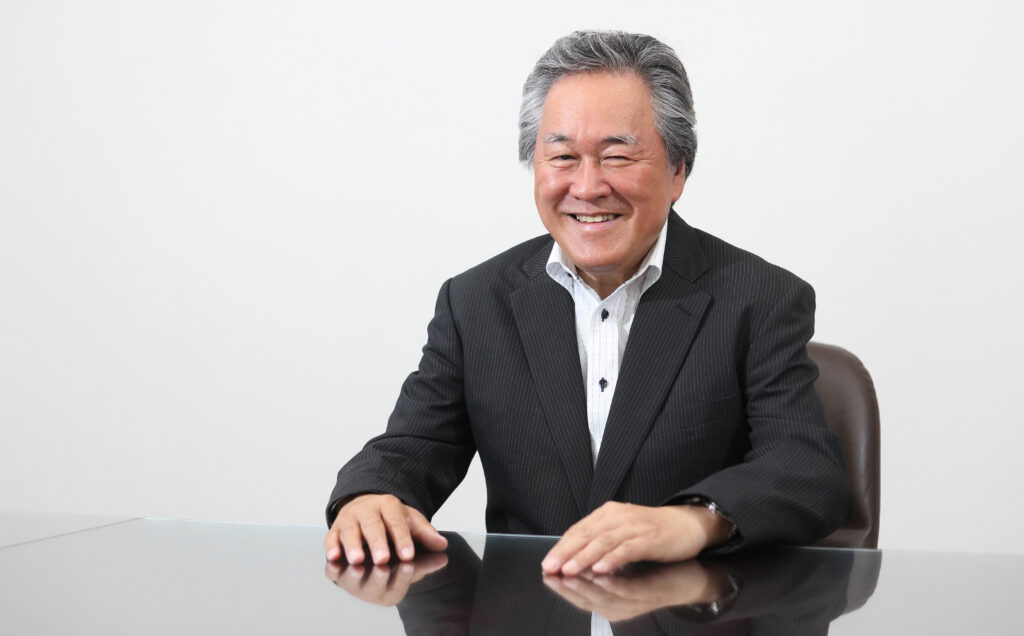
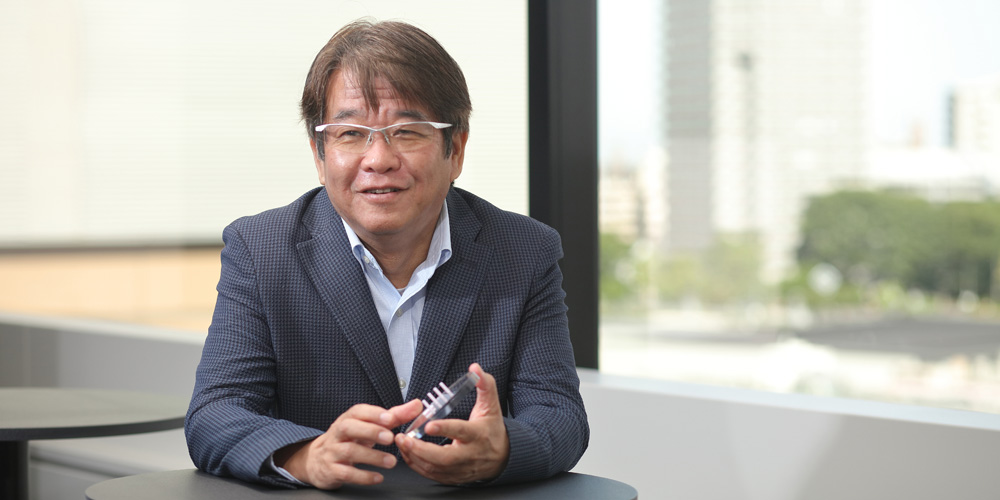
For this article, we spoke with Mr. Sugimura, who joined Orbray (then Adamant Kogyo) as a part-time worker in 1979 and, after working in both manufacturing and sales, went on to serve as a director of the company. Now an advisor, he has witnessed and contributed to Orbray’s growth for 45 years.
“Passing on a skill isn’t just handing someone a manual. It’s trying it yourself, failing, and knowing the joy of finally getting it right. That accumulation is what develops a person.”
Through Mr. Sugimura’s story, we trace the craftsmanship and culture of challenge that Orbray is determined to pass on to the next generation.
How a Part-Time Job Commuted to by Bike Kicked Off a 45-Year Career
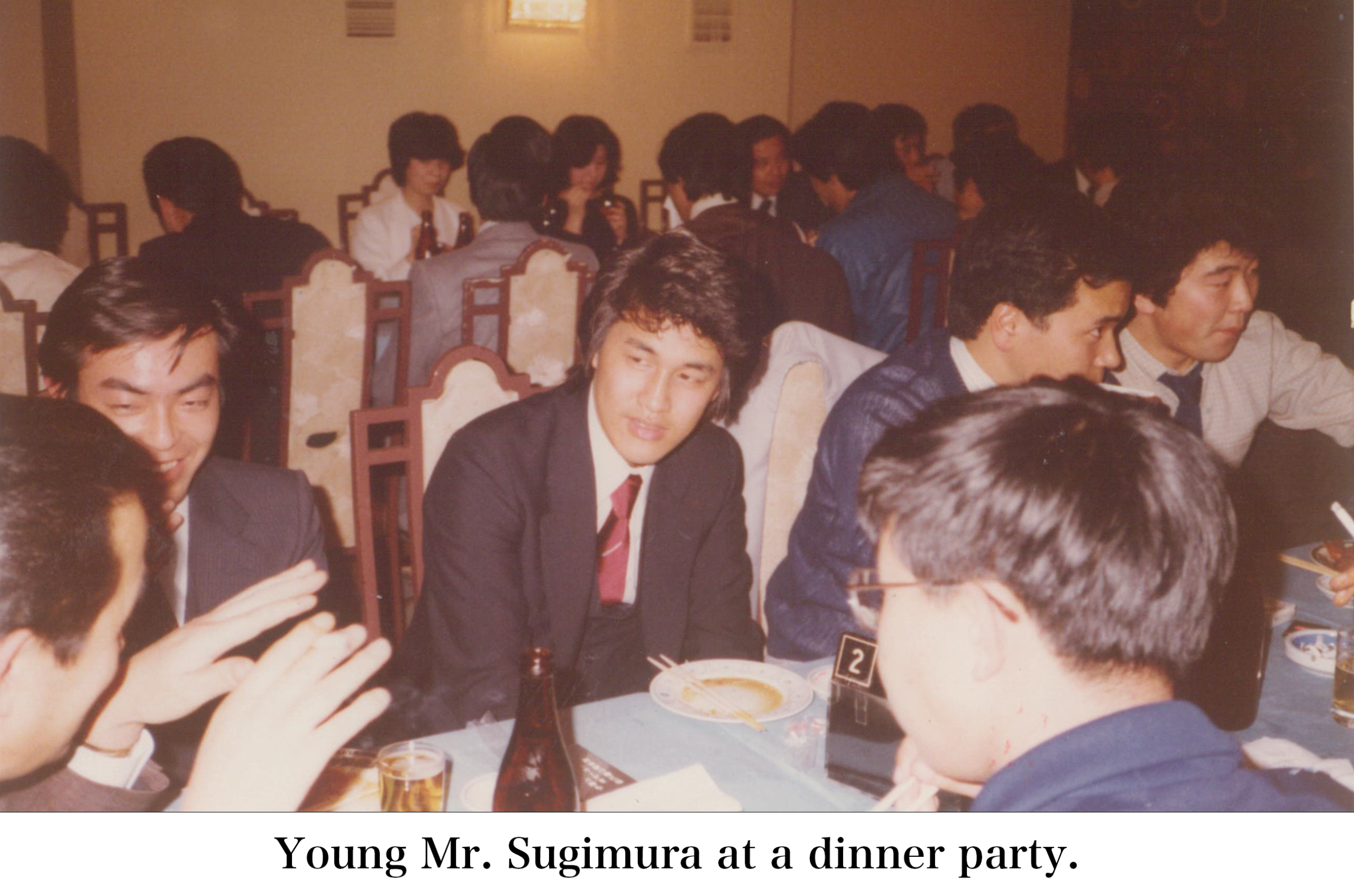
Mr. Sugimura’s connection with Orbray goes back more than 40 years. It was his third year of university. The reason he applied for the opening was simple. “It was a little over ten minutes from my parents’ house by bicycle. It was close, and they were hiring part-timers, so I thought I’d give it a try.”
It was the era when consumer video cameras were rapidly gaining popularity. Several times a week, Mr. Sugimura worked on assembly tasks such as bonding the quartz crystals used in video cameras. “The work wasn’t difficult, but there was real energy in the air. Everyone wanted to produce just one more unit.”
His decision to join the company full-time after graduation came with a characteristically frank story. “I’d heard the economy was good and the bonuses were too. And more than anything, being within walking distance was appealing (laughs). After my interview with the president, I got the job offer that same day, and even walked out with a day’s pay in hand. I felt a debt of gratitude, and honestly, I dived into my duties, thinking any job would do.”
The shop floor was always full of energy, with men and women working together to do our best. One thing that left a lasting impression was an in-house daycare called Jardin. Common enough today, it was a remarkably progressive initiative at the time. “The shop floor had many women working part-time, including quite a few single mothers. Jardin was created so they could work with peace of mind. If a child earned a perfect attendance award, the parent’s attendance went up too. That was the kind of place Orbray created. Caring for people while everyone built something together. A warm, down-to-earth culture of developing people ran through the company.”
“Hold Your Breath, Drill the Hole”
Craftsman’s Fingertips That Surpass Machines
After joining the company, Mr. Sugimura accumulated roughly ten years of experience on the manufacturing floor. What he witnessed there was a world of astonishing skill, fully deserving of the word “craftsmanship.”
“Drilling ultra-small holes, like the ones used in jewel bearings for watches. Back then, we made our own tools in-house by rolling diamond powder onto iron plates. You’d apply water, and hold your breath to focus as you drilled each hole.”
One of Orbray’s core strengths lies in producing much of its own precision machinery and tooling in-house. To achieve accuracy beyond what off-the-shelf machines can deliver, the company builds its own machining equipment and creates proprietary tools that solve problems defined only by its own people. “Difficult orders that other companies turned down came to us. That was because we had the accumulated skill to build even our own tools and machines.”
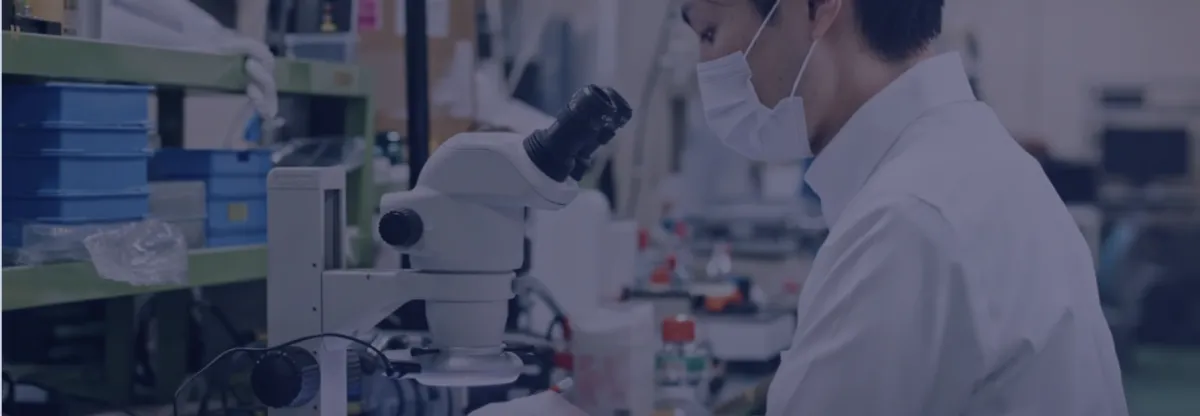
Automation has advanced on today’s manufacturing floor. Even so, there remain areas that only human senses can address. Examples include threading a line of just 15 microns, thinner than a human hair, or polishing processes where material removal is adjusted in 1-micron increments. Attempting these mechanically while monitoring numbers takes far more time, and still cannot match the speed and precision of a skilled worker’s fingertips.
“Machines are only a means. In the end, what matters is the feel of the material as your fingers work it, and the intuition built through years of experience. The machining of record styli is exactly that kind of work. There are jobs that only a seasoned machining specialist can do, someone who understands how sound travels not through theory but through feel. Niche, irreplaceable skills like these are Orbray’s pride.”
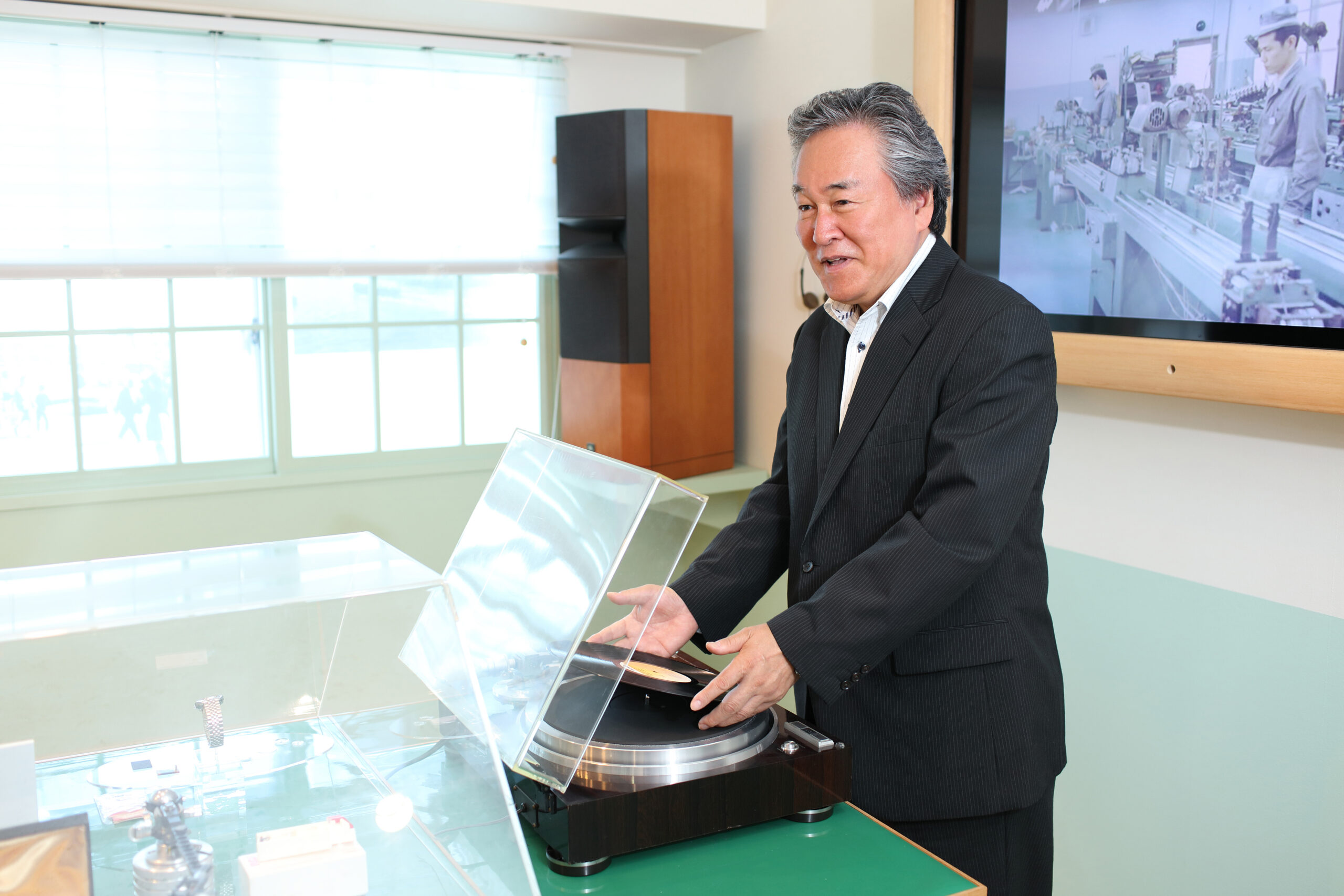
“Challenge with Passion”
The Best Textbook for Developing People
There is a phrase Mr. Sugimura returned to again and again throughout the interview. It is one of the company precepts handed down since the founding era: “Challenge with Passion.”
Skills are not acquired simply by being taught by senior colleagues. Mr. Sugimura is convinced that the will to try something yourself is the greatest source of growth. “When a young person came to me and asked, ‘Can I try this?’, I never once said no. Letting them take on the challenge is the best learning there is.”
Mr. Sugimura developed his own skill set the same way. When a major manufacturer approached the company with a difficult request, “We want to build a watch like this,” he worked through trial and error, over and over, until it finally took shape. “The customer tells you, ‘Well done, thank you.’ That sense of achievement becomes the passion for the next challenge. When I worked on one of the first analog liquid crystal watches, I spent six months fully focused on it, taking critical feedback by phone every day. When it was finally done, I was truly happy.”
Today’s younger generation may tend to fear failure and say “I can’t” before trying. Rather than criticizing this, Mr. Sugimura argues that what matters is creating an environment where people can take on challenges.
“Just going through the motions of a task won’t sustain motivation. This small component you’re making: how is it used in the market, and who does it help? Explain that properly, and make sure it’s understood. Only when people feel that the component is truly indispensable does drive emerge. A place where young people can take on a challenge, fail, and then continue until they get to ‘I did it!’ That is the tradition Orbray has nurtured.”
Connecting Skill and Purpose to the Next Generation
The Role of Middle Management as a Hub
Carrying longstanding technical traditions into the future is no simple task. As values diversify with the times, the old approach of “watch your seniors and learn” no longer holds.
“This isn’t something you can dismiss as a generational gap anymore. You teach carefully, with genuine care, and you standardize what should be standardized in manuals. On top of that, the question is how to draw out each person’s motivation. That’s where mid-level managers, standing between the veterans and the young, become essential,” Mr. Sugimura points out.
The middle management level serves as the hub of technical succession, bringing fresh energy into the organization. When they act on a desire to make the company better and contribute to society, vitality spreads throughout the whole organization. That sense of purpose permeates Orbray, from senior masters to mid-career colleagues, down to its junior employees, Mr. Sugimura says with evident pride.
“Recently, the buddy system, a mentor-apprentice pairing that matches young employees with legend-class veterans, has been taking hold. Not stealing the master’s technique by watching, but inheriting it through dialogue. There’s room for new ways of passing things on like that. The earnest character of Akita’s people, and a company culture that honors challenge. When those two come together, Orbray’s technology will only be refined further.”
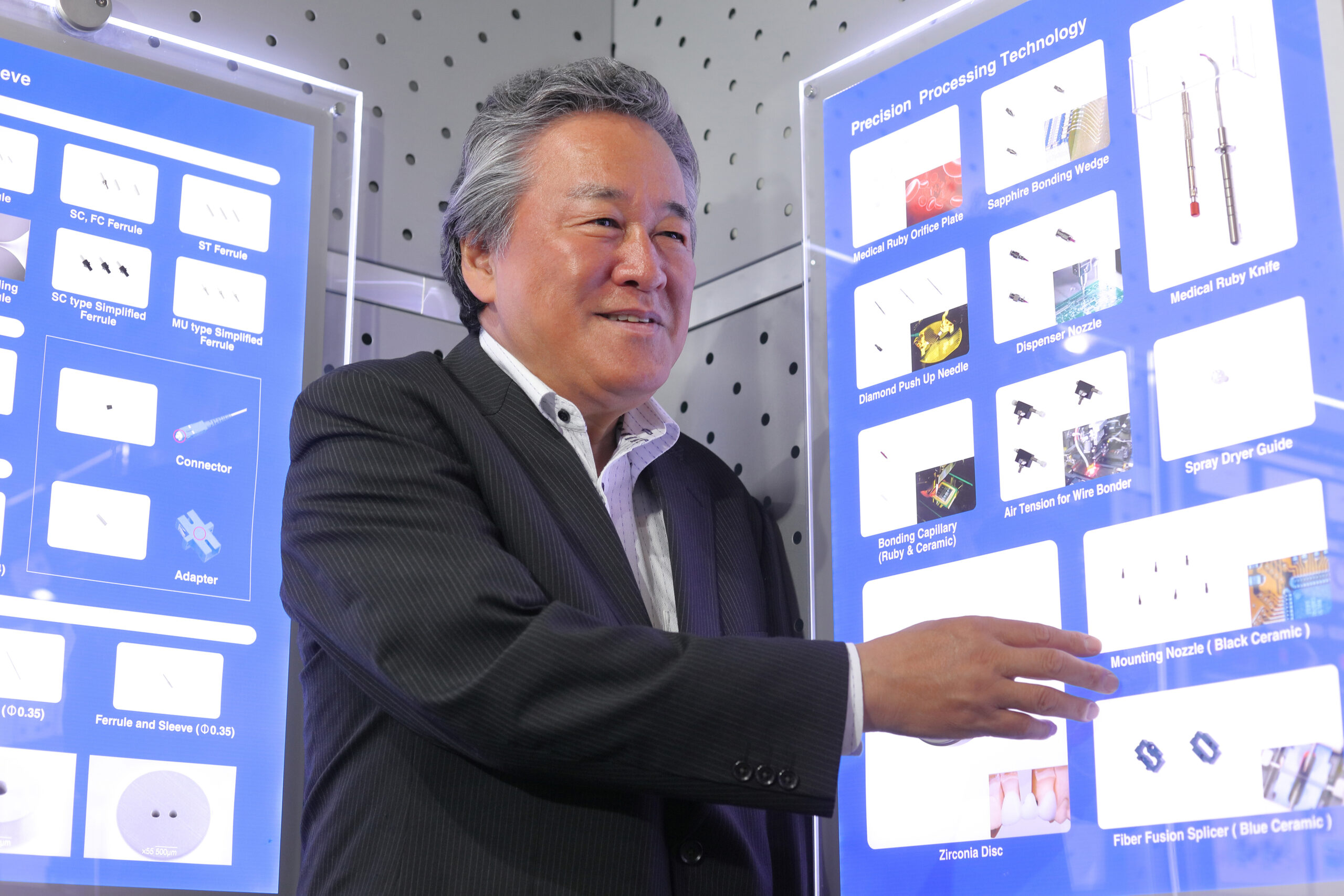
Connecting Passion to the Next 100 Years
What began as a student part-time job has now spanned 45 years. The path Mr. Sugimura has walked is, in itself, the history of Orbray’s journey as a master of precision jewel machining.
The company slogan “Challenge with Passion” is not simply a saying for improving technical skill. It means facing difficult problems without retreating, and creating the right answer with your own hands. It is also a message of encouragement from those who came before: they want the next generation to experience the joy found in that process.
What Mr. Sugimura hopes to pass on to younger generations is not some special philosophy. It is knowing where the things you make are used, and who they help. It is trying, without fear of failure. The joy of “I did it” that waits beyond is what develops people, and what carries Orbray’s technology into the future.
Rooted deeply in Yuzawa, Akita, Orbray continues its manufacturing with its eyes on the world. What we hope to pass on to the next generation is not only world-renown craftsmanship. It is a culture of continuous challenge, a climate that values and develops people, and a commitment to walking together with the local community. We believe all of these are values worth carrying into the future.
That pure feeling of “I want to try.” We will support that first step with everything we have. One hundred years from now, and beyond, products that surprise the world will continue to come from here in Akita. We sincerely look forward to welcoming new colleagues who will create the next story with us.
Another Story: Winter’s “Mitsuseki Seri”—Relaxing a Craftsman’s Heart

In the main article, Mr. Sugimura spoke with intensity about precision processing technology. But when the conversation turned to the foods of his hometown of Yuzawa, his expression became much softer.
“Yuzawa has great Inaniwa udon, and kiritanpo is also good. But the seri from Mitsuseki district is the best, no question.”
Seri, Japanese parsley, is a fragrant winter vegetable used in hot pots. Mitsuseki, a district in Yuzawa City, is not far from the Yuzawa factory. It is famous for producing some of Japan’s finest seri. For Mr. Sugimura, this seri is one of the pleasures that arrives with winter.
“The seri of Mitsuseki has longer roots. And the fragrance is so strong. I’d say it’s the best in the world.”
The warmth of Mr. Sugimura’s hometown pride reflects a deep attachment that comes only from decades of working and living in this place. His memories of lively younger days spent with colleagues in the factory dormitory were surely seasoned by these local flavors as well.
Perhaps what sustains craftsmanship is exactly this: the richness of food throughout the four seasons, and warm connections with the people of the region.
Orbray does not simply operate a factory in Yuzawa. It is home, sustaining its workforce with deep-rooted connections to the ancient land and culture, which live deep in the daily lives and memories of each person who works here. This blog installment leaves a warm impression, and offers a glimpse of Mr. Sugimura beyond the craftsman.
-
From Akita to the World: Orbray Supports a Variety of Challenges
-
Topping-Out Ceremony Marks a New Milestone for Our Future Headquarters and Community Collaboration Center
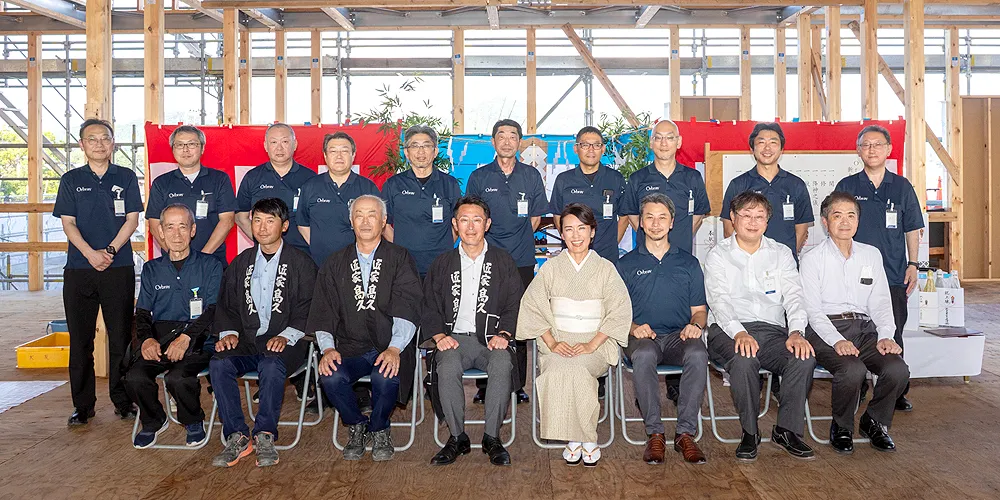
Creating a Place That Connects with the Community -
Building Unimagined Futures: The Engineers Driving Innovation at Orbray for the Last 40 Years
-
Peering 100 years into the future: The decision to start the “Second Founding” in Yuzawa, Akita.

-
Discovering Akita’s Appeal Through the Voices of Young Employees
Orbray Growing Together with the Community