Building Unimagined Futures: The Engineers Driving Innovation at Orbray for the Last 40 Years
“Work 24 hours a day.” Such a demand would be unthinkable today. However, there was a time when that was the standard work culture. Customers calling your home on weekends. Making technical calls from overseas on staticky international lines. And sometimes, five years of development effort could be wiped out in an instant.
And yet, the exhilaration of “building a future that no one could fully imagine” motivated Orbray’s engineers to persevere and excel despite significant hurdles.
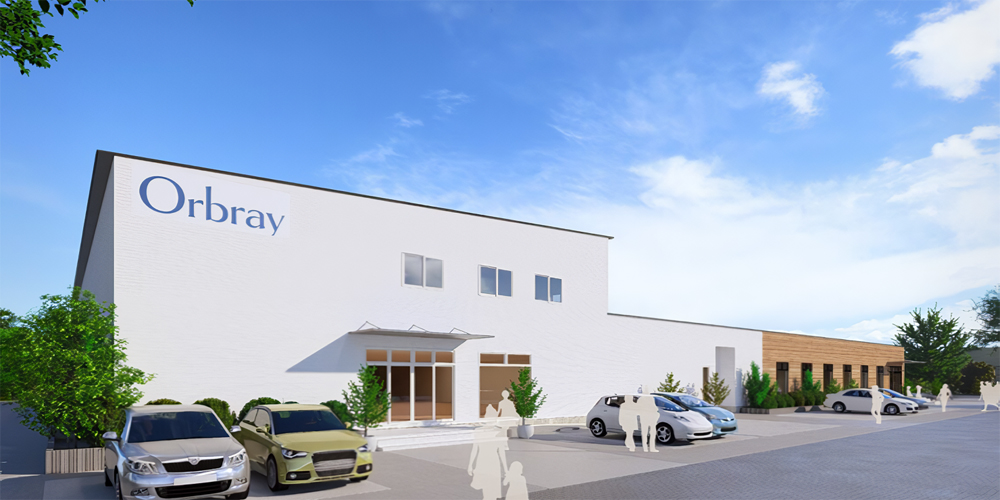
From the perspective of Orbray’s new headquarters being constructed in Yuzawa City, Akita Prefecture, it’s hard to imagine the challenges of that era, which forged the company’s character of relentlessly refining its precision processing technologies of “cutting, grinding, and polishing.”
The technologies that Orbray developed in that era may not be visible in your daily life. But Orbray’s technology is at work in countless places, supporting the internet and the smartphones that we take for granted, underpinning the infrastructure that carries our data.
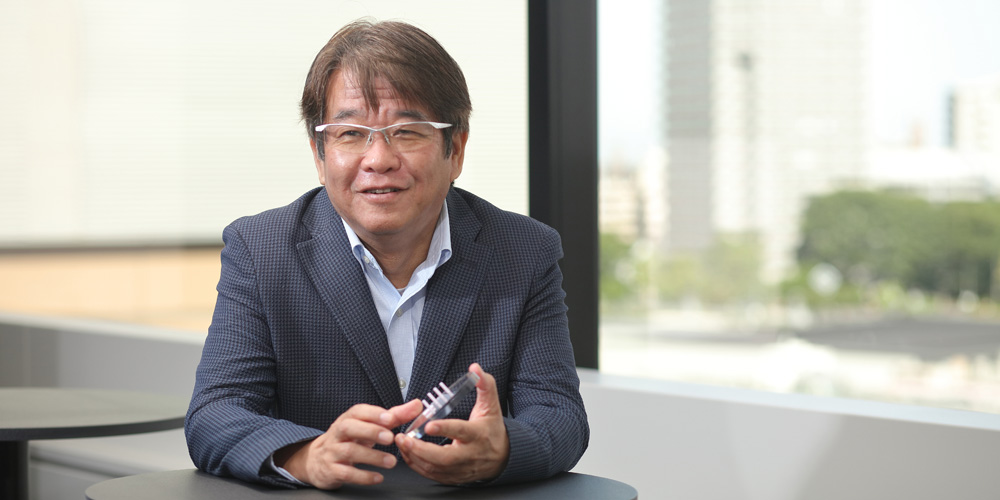
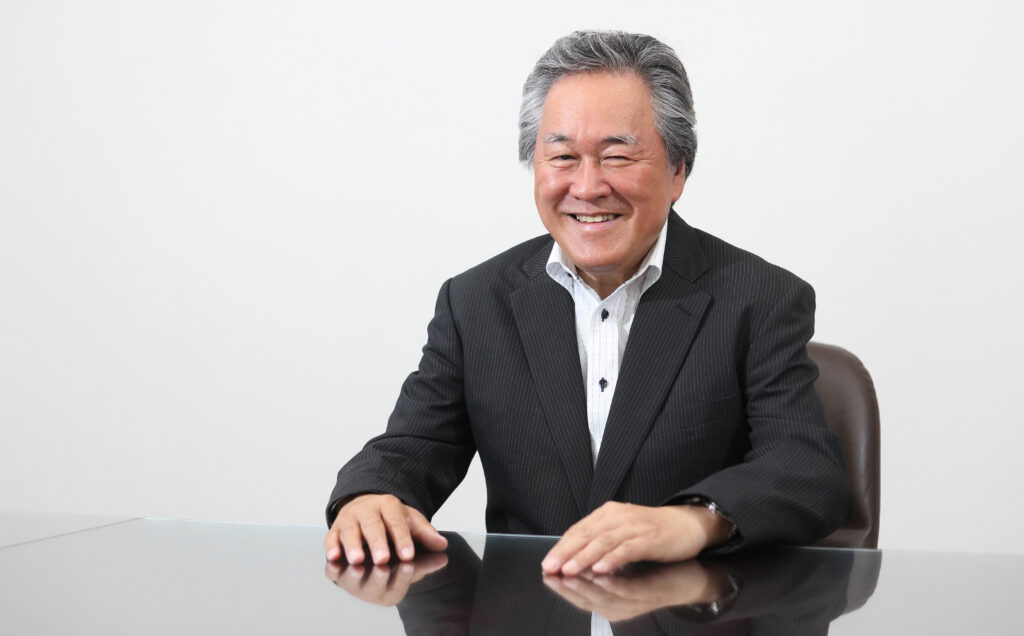
Eiji Chihara is a senior advisor who joined the company in 1981 and has been an integral part of Orbray’s growth for more than 40 years. In this article, he shares his firsthand account of the people, the setbacks, and the breakthroughs that shaped Orbray into what it is today.
From watch parts to fiber optics. From the collapse of the Japanese economic bubble to global expansion. And now, into the age of AI and data centers.
What follows is the story of a company and the engineers who have spent decades creating a future the world hadn’t yet imagined, told through the eyes of one engineer who witnessed it all.
“Watches alone won’t save us.” Staking the future on optical communications
When Chihara joined Orbray (then Adamant Kogyo) in 1981, Japan’s watch industry was entering a major transition period.
“When I joined the company, Orbray was making jewel bearings, the small components that support the gears inside a watch. Quartz watches were beginning to gain popularity at the time, but mechanical watches were still dominant. However, the watch industry as a whole was already being called a sunset industry. The company was urgently searching for a new business pillar beyond watches.”
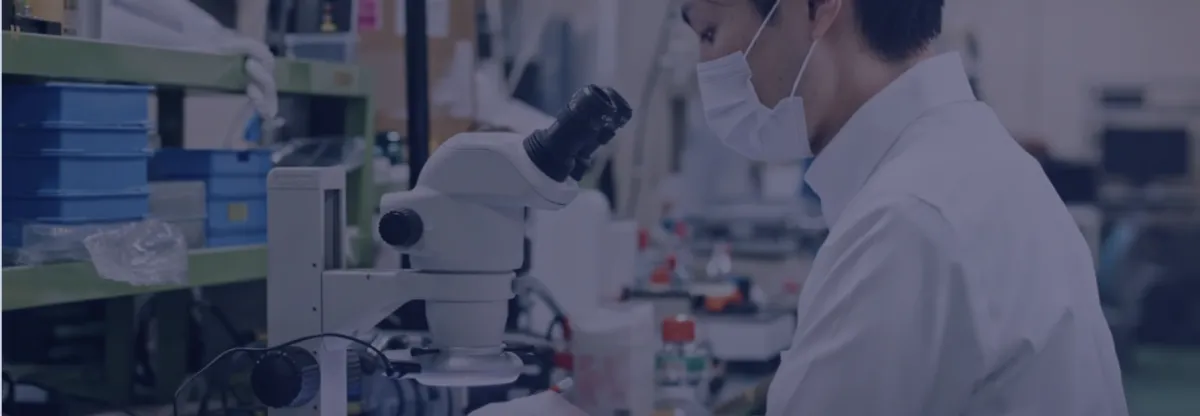
Assigned to the R&D division, Chihara embarked on a course of relentless trial and error that would be difficult to imagine today. The work underway was what would become the foundation of Orbray’s current core business: the development of components for optical communications.
Optical communications is the technology that underpins the internet and smartphone connectivity we rely on today. Behind the streaming videos, social media, and online meetings that have become part of daily life, Orbray’s ultra-precision components are at work in countless places.
At the center of that infrastructure is the ferrule. This small component, with a tiny hole designed to align and connect optical fibers, was a direct extension of the expertise developed through jewel bearing production: drilling precise holes into hard materials and polishing them to exacting tolerances.
“At the time, optical communications was just beginning to take shape globally, and the technology was evolving by the day. I started in optical filter and lens development. Every day carried that sense of exhilaration. We were building something that simply didn’t yet exist in the world.”
24/7 work to build a future without any blueprints
The atmosphere of the 1980s to the 1990s was one of sheer intensity. Reflecting on that time, Mr. Chihara said with a wry grin, “The fervor with which we worked back then would be hard to imagine today. We may have been one of the most relentlessly hardworking companies of our time—back in an era when work conditions were far more demanding than would be acceptable today,” he said.
“We were working all of the time. Customers would call my home on weekends and a meeting would start right there on the phone. It seemed completely normal. But the fascination of the work outweighed the hardship. It wasn’t even close.”
The source of that fascination was collaborative development, done side by side with customers.
“We were meeting almost daily with some of Japan’s leading telecommunications equipment manufacturers. We would hear their requirements firsthand and build the devices together to meet their needs. There was no remote work, no digital shortcuts. But sitting across from someone, building something together, and watching it succeed, that shared sense of purpose and achievement was invaluable. We had plenty of failures too. Five years of development could amount to nothing if the product didn’t perform. But the energy on the floor was invigorating . If this one doesn’t work, move on to the next idea. That speed, that drive, it was everywhere.”
Long before the world began to enjoy the convenience of the internet, Chihara and his colleagues were planting the seeds of that infrastructure through painstaking, unglamorous trial and error.
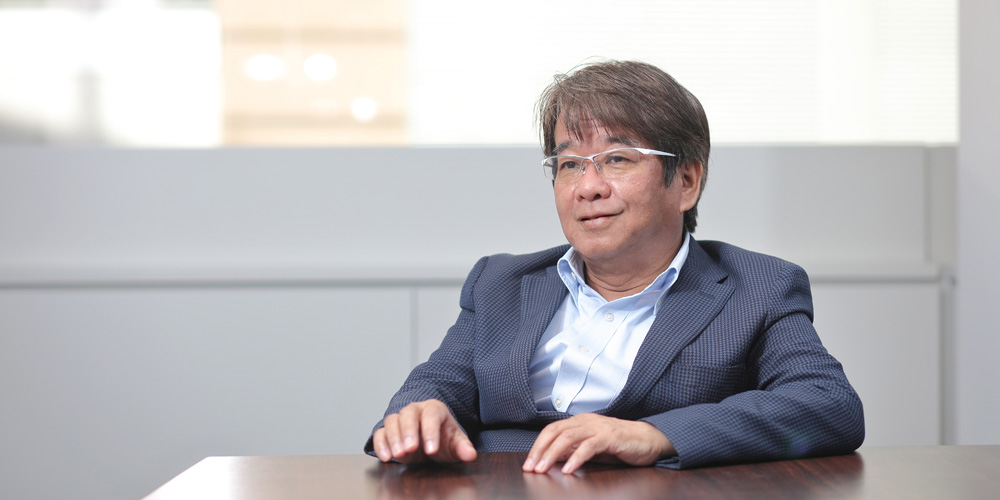
“If the product is good, it will reach the world”Orbray’s technology spread globally
While optical communications was still in its infancy, Orbray was already working to deliver its technology beyond Japan. Chihara himself would go on to travel the world, serving as both an engineer and a salesman.
“My first overseas trip was to the UK. There was no internet, no email. Once you left Japan, your only means of communication with HQ was over a landline telephone. We would have staff in Japan gather at the office despite the time difference, and I would conduct technical discussions on phones with terrible latency (lag between words spoken and received due to signals having to travel on copper wire) and poor audio quality (for the same reason).”
“I spent a full month traveling across Europe on one trip. Back then, airline tickets weren’t digital. They were a stack of paper slips. I remember the small pleasure of watching the stack get thinner as the trip wore on. Looking back, it was an unimaginably analog and physically demanding way to travel.”
Those efforts paid off. Orbray’s ferrules were adopted by major international telecommunications infrastructure companies.
“If the product is good, global players will recognize it, regardless of company size. That became a real source of confidence for us. At the time, Japan was leading the world in optical communications. Our components were being integrated into systems built by the country’s largest telecom infrastructure operators and equipment manufacturers. Our products ended up in submarine cables and critical network nodes around the world. You couldn’t see them from the outside, but knowing that we were supporting the backbone of global communications, that sense of pride grew naturally.”
Orbray’s resilience: How the Akita factory carried the company through its toughest years
Not every period was smooth. The collapse of the bubble economy in the 1990s, the dot-com crash in 2000, and later, the global financial crisis. Along with the rest of society, Orbray faced hardships with each wave of economic trouble.
“When the Japanese bubble burst, I genuinely thought the company might not survive. Orders dropped to a tenth of what they had been. No one was smiling. The tension in the air was something today’s employees have never experienced.”
What carried the company through that period was the Akita factory. Chihara himself spent seven years on assignment at the Yokote plant in Akita, away from his family.
“The people of Akita are serious and conservative by nature. But in manufacturing, that is a great strength. They perform the required work, day in and day out, without ever cutting corners. That consistency, that integrity, is what makes it possible to maintain quality at the highest global standards. During my time there, I kept telling them, “Don’t worry about the moods of headquarters. Let your work speak for itself.” The people closest to the work know it best. When the factory floor started taking ownership, I could feel the entire organization getting stronger.”
To more futures that are not yet imaginable: Orbray’s quest continues
Today, Orbray has declared a “Second Founding” and is entering a period of significant transformation. The company plans to formally register its headquarters relocation to Yuzawa City, Akita Prefecture, in 2026. This is not simply a change of address. It is an effort to build a model of mutual prosperity, hand in hand with the local community.
The era of “24/7 work” is over. In its place, a more open and flatter culture has taken root at Orbray.
“Here, we don’t use job titles. Unlike previously at Orbray, everyone is addressed with ‘san,’ regardless of rank. We have created a new company culture where anyone can exchange opinions freely, whether you’re a manager or a new hire, without holding back due to deference to someone with a higher rank.”
In my day, you learned by watching your superiors and figuring it out yourself. Now, senior employees actively share their knowledge. “This approach might fail. Keep a close watch.” If a young employee says they want to do something, we’ll send them to an international trade show in their first or second year. There are things you can only learn by being there. Watching them come back changed, a little shaken up by the culture shock, and then growing from it. That’s one of the most rewarding things to see.”
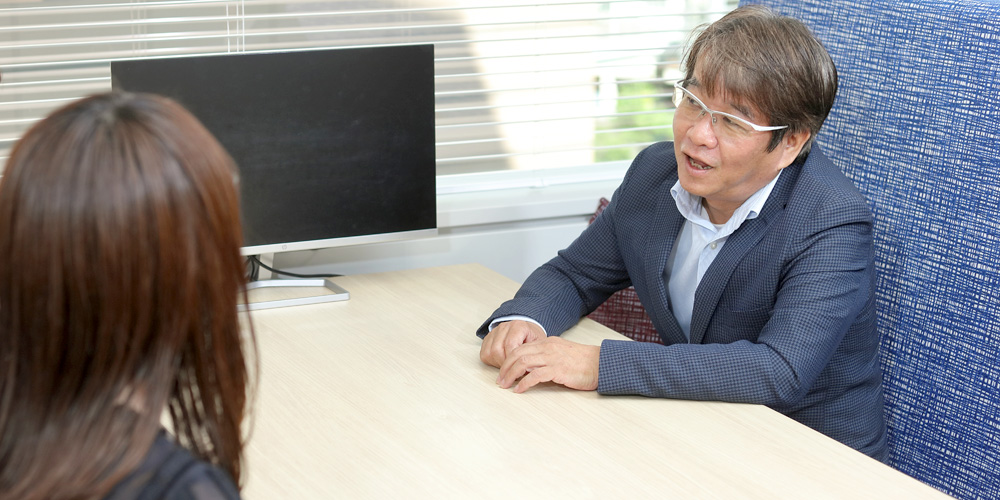
Orbray’s sights are now set on the next generation of innovation: AI, data centers, and quantum technology. Just as optical communications was an unproven, undefined field 40 years ago, the company is once again stepping into unknown territory.
“Very few people end up in jobs that directly apply what they studied in school. What matters is what you learn along the way, and whether you have the drive to keep pushing yourself further. Orbray has the technology to support that, and the culture to back it up. Our products may not be evident in everyday life. But the smartphone you’re looking at right now, and the information flowing through the internet behind it, none of that would reach you without our ‘cutting, grinding, and polishing’ technology.”
Chihara closed with this:
“Talking about company loyalty might sound old-fashioned. But seeing a customer’s face light up because of something we built, that never gets old. If you’re going to work, you should enjoy it. I want people to accumulate those moments of success. Orbray is not just a company that makes components. We want to remain a company that connects the world, and creates the future.”
Looking toward the next 100 years, won’t you join us in writing the next chapter of Orbray’s future?
Another Story: Life in Akita — “Home is where you make it”
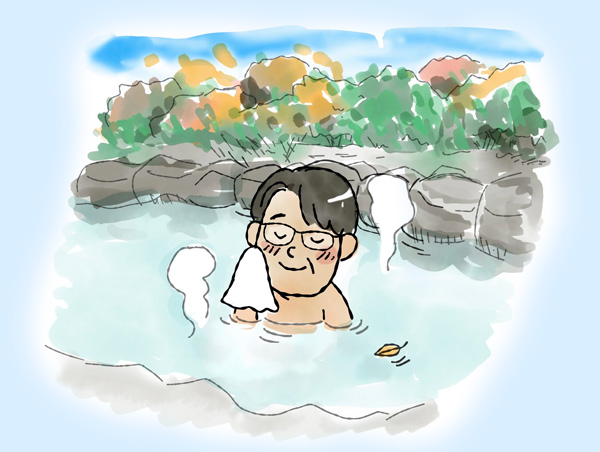
In the main feature, we talked about Orbray’s technologies and challenges. Here, we’d like to share a glimpse into the everyday life in Akita of Mr. Eiji Chihara, senior advisor.
During the seven years he was stationed in Yokote, on weekends he joyfully luxuriated in Akita’s hot springs. When he wasn’t advancing through all seven baths of the famous Nyuto Onsen area, he often dropped by local hot springs. He was also charmed by Kakunodate’s stunning cherry blossoms and autumn foliage — examples of the rich seasonal beauty unique to Akita.
“There’s nothing but nature here,” he jokes, but it’s clear that Akita gradually captivated his life.

One thing he found that he couldn’t live without was iburigakko (smoked pickled daikon). Searching for his personal favorite, he loved to compare the different varieties made by the local farm women. Even now, whenever he visits Akita on business, he can’t resist bringing some back home.
Another place he visited many times was the Warabi-za Theater. “There’s a gentle, heartwarming atmosphere to performances in the Akita dialect,” he says. “The small theater brings you very close to the actors, for a truly entertaining experience.”
He often attended performances with his wife.
“Home is where you make it. …It would be perfect, if not for the snow,” he laughs, but his words and expression reveal a deep fondness for Akita.
Perhaps the cutting-edge technologies that underpin the world are born from the atmosphere of such places and connections between people that it fosters.
-
Discovering Akita’s Appeal Through the Voices of Young Employees
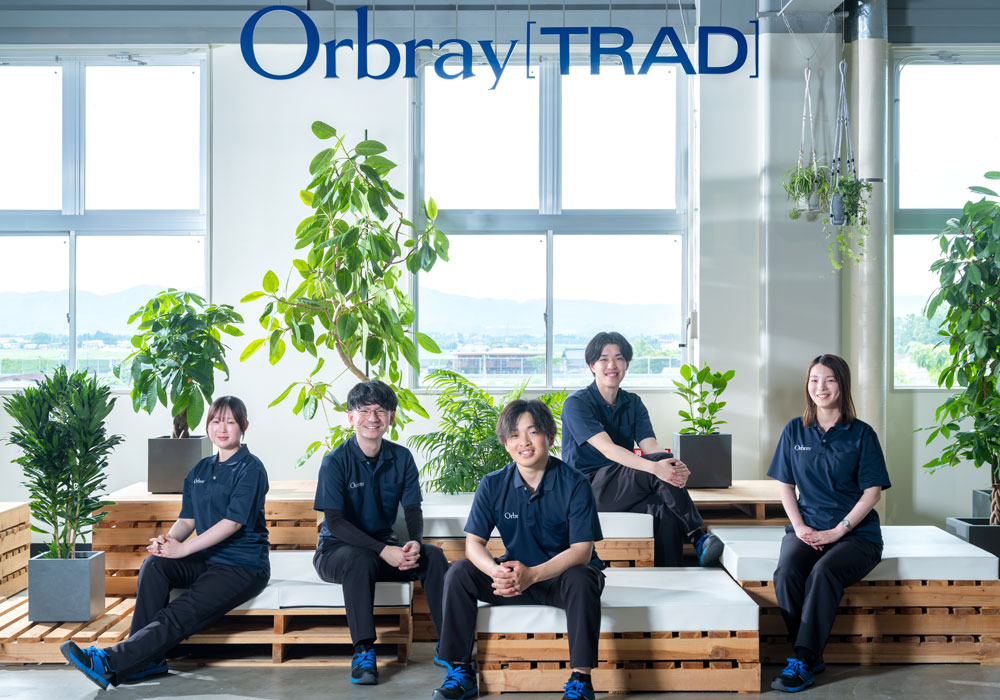
Orbray Growing Together with the Community -
Challenge with Passion: How Orbray Passes Craftsmanship to Future Generations by Developing its People
-
Developing People Through the Joy of Learning
Orbray Academy Expands the Circle of Learning -
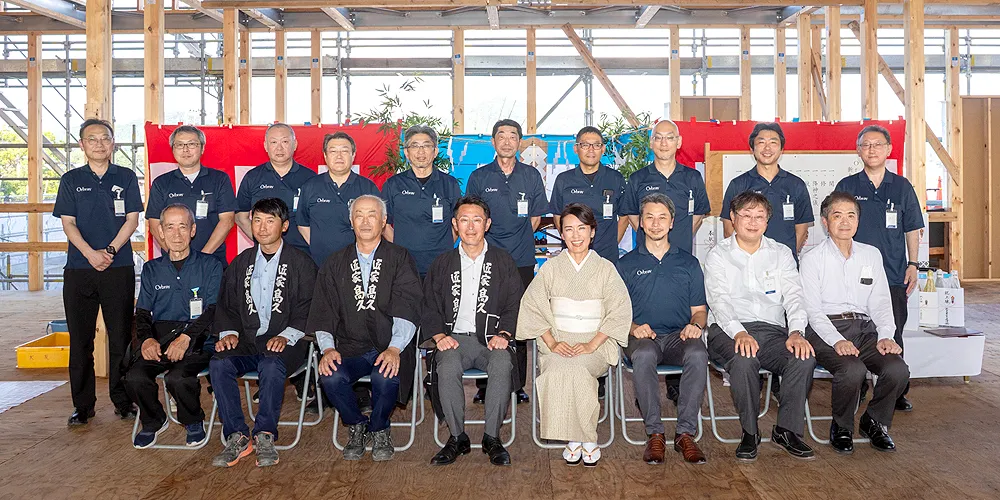
Topping-Out Ceremony Marks a New Milestone for Our Future Headquarters and Community Collaboration Center
Creating a Place That Connects with the Community -
From Akita to the World: Orbray Supports a Variety of Challenges
-
Peering 100 years into the future: The decision to start the “Second Founding” in Yuzawa, Akita.